TELEPHONES ANSWERED 24 HOURS A DAY

FREE CONSULTATION
312-629-0669


Can AI-Generated Content Be Considered Child Porn?
 Artificial intelligence (AI) is transforming not only the tech industry but the world as we know it. People use it to create images, videos, and more. It also helps power digital tools in healthcare, business, and education. As these tools become more advanced, new legal questions continue to arise. One of the most serious questions involves whether AI-generated sexual images of minors can be treated as child pornography under the law.
This topic is important because child pornography charges carry some of the strictest penalties in the criminal justice system. Even when an image is created by software instead of a camera, legal consequences may still apply. If you are facing questions or concerns related to AI content, speaking with a Chicago, IL child pornography defense lawyer can help you better understand your rights and options.
How Does Federal Law Define and Prosecute AI-Generated Child Pornography?
Federal law takes a broad view of what qualifies as child pornography. It includes any visual depiction of a minor engaged in sexually explicit conduct. The law states that a "visual depiction" can include digital images, videos, and computer-generated material. This means the law does not only apply to traditional photographs.
Because of this wide definition, AI-generated images may still fall under federal law in some situations. These cases often involve online platforms or digital storage systems. Federal charges may apply when:
-
The image appears to show a minor in sexually explicit conduct.
-
The material is sent through the internet or another interstate system.
-
The content is stored on devices that connect across state lines.
-
The image is shared, received, or stored using online platforms.
Federal prosecutors may also rely on 18 U.S.C. § 2252A, which addresses the knowing possession, receipt, distribution, or production of child pornography using digital devices. Since AI-generated content usually involves online tools, cloud storage, or internet platforms, many cases fall under federal jurisdiction.
Can AI-Generated Images Be Treated the Same as Real Photos?
AI-generated images can look realistic. Some images are created with text prompts. Others are formed by blending or altering real photos. These tools can produce images that appear very lifelike.
From a legal standpoint, courts often focus on what the image shows rather than how it was created. These cases also raise important constitutional questions. Courts must balance criminal enforcement with free speech protections. Judges may look at whether the image is considered obscene and whether it creates the type of harm that child pornography laws aim to prevent. Because of these legal limits, AI-based cases can be very complex.
Does Illinois Law Apply to AI-Generated Child Pornography?
Illinois law also strictly regulates child pornography. Under 720 ILCS 5/11-20.1, it is illegal to knowingly possess, produce, disseminate, or view child pornography. The statute defines child pornography as any depiction involving a minor engaged in sexual conduct.
Illinois law focuses on what the image shows and whether it meets the legal definition of sexual conduct. If an AI-generated image appears to involve a minor in a sexual setting, state charges may still apply even if no real child was used to create the image.
Do Deepfake Images Create Additional Legal Problems?
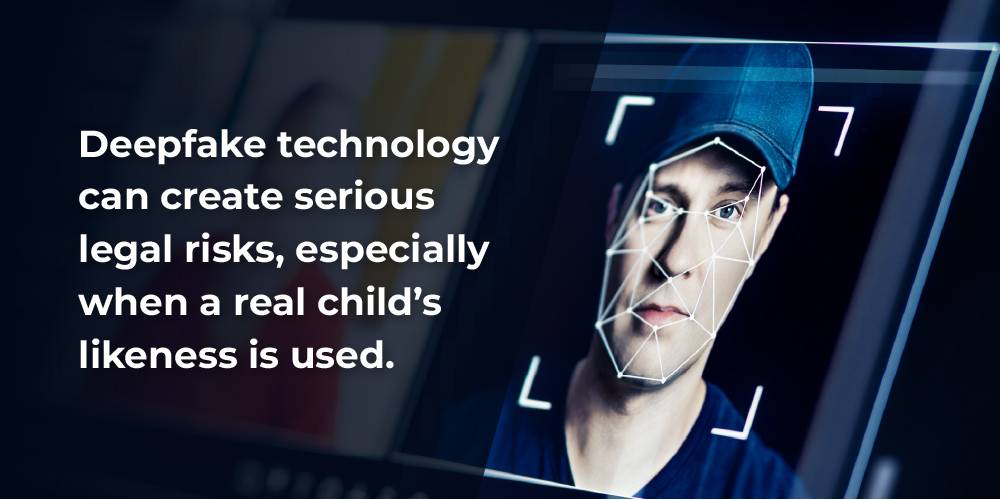
The situation becomes more serious if a real child’s face is used in a deepfake image. Deepfake technology uses artificial intelligence to place a person’s face onto another image or video. When a minor’s image is used in this way, the legal risks increase. In those cases, prosecutors may argue that a real person was directly impacted and pursue additional charges.
The use of a real child’s likeness may be viewed as exploitation, even if the original image was created by software. Prosecutors may also look at privacy concerns and long-term emotional harm. In some situations, deepfake cases may also lead to civil lawsuits. Families may seek financial damages for emotional distress or reputational harm.
Is Possession of AI-Generated Child Pornography Punishable?
A person does not need to create or share the images for legal consequences to apply in some situations. One of the most important issues in these cases is knowledge. Prosecutors must show that the material was knowingly possessed. This can become important when files appear due to spam messages, shared devices, automatic downloads, or computer malware.
If possession charges are filed, the potential penalties may include:
-
Prison sentences that may range from several years to decades, depending on the charge
-
Long probation or supervised release after incarceration
-
Mandatory sex offender registration
-
Limits on where a person may live or work
-
Restrictions on internet access and electronic devices
The exact consequences depend on the specific charge, the number of images involved, and whether there is any prior criminal history. Because the stakes are so high, you want an attorney to carefully review every detail of the case to find the most appropriate defense strategy.
What Defenses Exist in AI-Generated Child Pornography Cases?
Many of these cases turn on how the images were created, stored, or discovered. Small technical details can make a major difference in the outcome.
One key issue is whether the image legally meets the definition of child pornography. Not every image that raises concern automatically meets that standard. Courts must look at the content of the image, how it appears, and whether it fits the legal definition of sexually explicit conduct involving a minor.
How the files entered a device is also critical. Digital forensic experts often review download history, file creation dates, access logs, and storage locations. This information may help explain whether the material was intentionally downloaded, received by accident, or stored without your knowledge.
Search and seizure issues also matter in these cases. Law enforcement must follow strict rules when searching digital devices. If those rules were not followed, some evidence may not be allowed in court. These legal and technical details are often the foundation of a complete defense strategy.
Contact a Chicago, IL Child Pornography Defense Attorney
Cases involving artificial intelligence and child pornography are legally complex. Federal and state prosecutors pursue these cases with advanced technology and significant resources. For that reason alone, early legal guidance is critical. If you are facing allegations involving AI-generated images, you should speak with our Chicago, IL child pornography defense lawyer as soon as possible.
At the Law Offices of Hal M. Garfinkel LLC, Chicago Criminal Defense Attorney, clients benefit from the experience of a former prosecutor who understands how these cases are built from the inside. That background helps Attorney Garfinkel anticipate government strategy, identify weaknesses in investigations, and challenge evidence in a focused and informed way. Call 312-629-0669 today to schedule a free consultation.
134 N LaSalle St, Suite 860,
Chicago, IL 60602
TELEPHONES ANSWERED
24 HOURS A DAY
312-629-0669
Chicago Criminal Defense Attorney134 N LaSalle St, Suite 860,
Chicago, IL 60602312-629-0669

Contact Our Firm
 The use of the Internet or this form for communication with the firm or any individual member of the firm does not establish an attorney-client relationship. Confidential or time-sensitive information should not be sent through this form.
I have read and understand the Disclaimer and Privacy Policy.