TELEPHONES ANSWERED 24 HOURS A DAY

FREE CONSULTATION
312-629-0669


Can You Beat a Federal Drug Charge Under the RICO Statute?
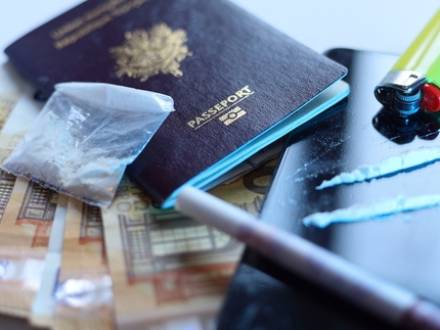 RICO stands for Racketeer Influenced and Corrupt Organizations Act, and it was originally designed to fight organized crime like the mafia. Today, federal prosecutors use RICO to target drug trafficking organizations.
If you are convicted under RICO in 2026, the penalties can be devastating – you are looking at decades in prison and massive fines. The good news is that RICO charges are beatable. Prosecutors must prove very specific elements that a skilled defense attorney can challenge.
If you are facing federal drug charges of any kind, our Chicago federal criminal defense attorney with the Law Offices of Hal M. Garfinkel LLC, Chicago Criminal Defense Attorney should be your first call. 312-629-0669.
The Four Elements of the RICO Statute and How They Apply to Drug Cases
Congress passed the RICO Act in 1970 as part of the Organized Crime Control Act. RICO makes it a federal crime to participate in a pattern of racketeering activity through an enterprise.
That legal language sounds complicated, but it breaks down into four main elements prosecutors must prove.
Working Through an Enterprise
First, they must show that an enterprise existed. An enterprise can be a corporation, partnership, association, or any group of individuals working together. In drug cases, this might be a drug trafficking organization with leaders, suppliers, distributors, and street-level dealers.
Interstate or Foreign Commerce
Second, prosecutors must prove the enterprise engaged in or affected interstate or foreign commerce. This is usually easy for prosecutors to establish in drug cases because drugs and drug money typically cross state lines at some point.
Employment or Association with Enterprise
Third, the government must show you were employed by or associated with the enterprise. You do not have to be a leader or even a significant member. Anyone who participates in the enterprise's activities can potentially face RICO charges.
Pattern of Racketeering
Fourth, and most importantly, prosecutors must prove you participated in a pattern of racketeering activity. A pattern requires at least two related criminal acts within a ten-year period. For drug trafficking organizations, these acts are usually drug distribution offenses, money laundering, or related crimes.
Why Do Federal Prosecutors Use RICO for Drug Charges?
RICO gives prosecutors powerful tools they do not have with standard drug charges alone. Under RICO, prosecutors can charge everyone involved in a drug trafficking organization in a single case, even if those people never met each other or worked together directly. As long as they all participated in the enterprise, they can all face RICO charges.
Federal drug trafficking cases involve mandatory minimum sentences, and RICO charges can add even more prison time on top of those minimums. RICO convictions carry penalties of up to 20 years in prison, and if any of the predicate acts involved crimes punishable by life imprisonment, the RICO sentence can also be life in prison.
RICO also allows prosecutors to seek forfeiture of all property obtained through racketeering activity. This means the government can seize homes, cars, bank accounts, and any other assets connected to the drug enterprise. For defendants, losing everything they own is often as devastating as the prison sentence itself.
What Defenses Can You Raise Against Federal RICO Drug Charges?
While RICO charges are serious, they are not impossible to beat. The complexity that makes RICO powerful for prosecutors also creates opportunities for the defense. Several defense strategies can be effective depending on the facts of your case.
Questioning the "Enterprise" Classification
One strong defense challenges whether a true enterprise existed. If the group was loosely organized or people worked independently rather than as part of a structured organization, the enterprise element might fail. Prosecutors must prove the enterprise had some structure and continuity over time.
Attacking Claims of Racketeering
Another defense attacks the pattern of racketeering activity requirement. Two criminal acts might not be enough if they are not sufficiently related to each other. The acts must have similar purposes, results, participants, victims, or methods. If the prosecution's evidence shows isolated incidents rather than an ongoing pattern, the RICO charges might not hold up.
Challenging the Defendant’s Alleged Participation
Challenging your level of participation is also critical. Being present around people who committed crimes does not make you part of a RICO conspiracy. Prosecutors must prove you knowingly participated in the enterprise's activities. If you were unaware of the broader criminal organization or your role was minimal, you might avoid RICO liability even if others in the group are convicted.
Constitutional Violations
Constitutional violations during the investigation can also provide strong defenses. Federal agents sometimes overstep their authority when conducting searches, wiretaps, or interrogations. Evidence obtained illegally can be suppressed, and without that evidence, the prosecution's case may collapse.
Witness Credibility Issues
Finally, attacking the credibility of cooperating witnesses is often crucial in RICO cases. Many federal drug prosecutions rely heavily on testimony from co-conspirators who agreed to cooperate in exchange for reduced sentences. These witnesses have strong incentives to lie or exaggerate to please prosecutors.
Call a Chicago, IL Federal Criminal Defense Attorney Today
At the Law Offices of Hal M. Garfinkel LLC, Chicago Criminal Defense Attorney, we provide aggressive defense representation for clients facing federal drug charges. Attorney Hal M. Garfinkel is a former prosecutor who has handled intense, high-profile federal criminal cases and understands the strategies prosecutors use in RICO prosecutions. Call us at 312-629-0669 for a free consultation with our Chicago federal drug crimes defense lawyer.
134 N LaSalle St, Suite 860,
Chicago, IL 60602
TELEPHONES ANSWERED
24 HOURS A DAY
312-629-0669
Chicago Criminal Defense Attorney134 N LaSalle St, Suite 860,
Chicago, IL 60602312-629-0669

Contact Our Firm
 The use of the Internet or this form for communication with the firm or any individual member of the firm does not establish an attorney-client relationship. Confidential or time-sensitive information should not be sent through this form.
I have read and understand the Disclaimer and Privacy Policy.